26700 Towne Centre Dr #290 Foothill Ranch, CA 92610
Can Invisalign Fix Overbite in Adults?
In the pursuit of a perfect smile, many individuals seek solutions to correct dental imperfections like overbites. Traditionally, metal braces were the go-to treatment for such issues, but advancements in dental technology have introduced more discreet and convenient options. One such innovation is Invisalign, a popular choice among adults and teenagers alike due to its clear aligners that offer a less conspicuous way to straighten teeth. But can Invisalign fix overbite effectively? Let’s delve into this question with a detailed exploration of its capabilities, benefits, and considerations.
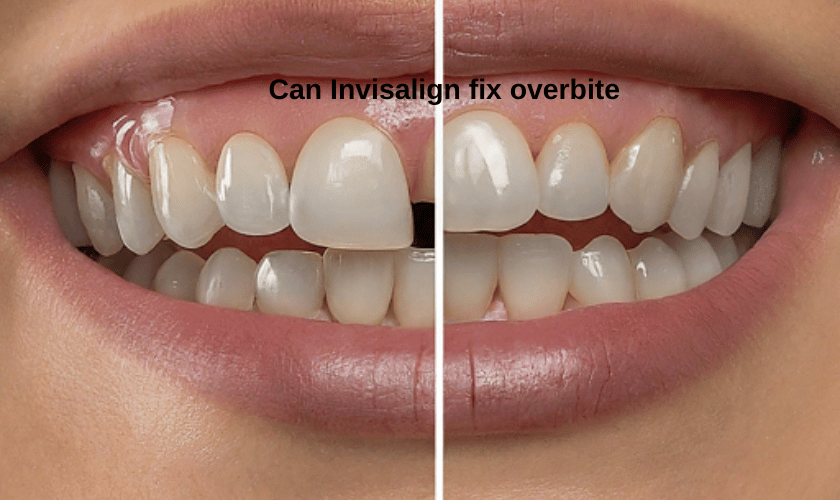
According to the American Association of Orthodontists, a normal overbite is around 2-3 millimeters. However, anything exceeding that can be considered an overbite and might require correction.
Can Invisalign Fix Overbite? Unveiling the Potential
Now, for the big question: Can Invisalign fix overbite? The answer is – it depends! Invisalign is a fantastic option for mild to moderate overbite cases. These clear, removable aligners gently shift your teeth into their ideal positions, effectively correcting the overbite and creating a more balanced bite.
Studies have shown promising results. A 2017 research paper published in the Journal of Clinical Orthodontics found that Invisalign could successfully treat various malocclusions, including overbites. However, the severity of your overbite plays a crucial role in determining if Invisalign is the right choice.
Can Invisalign Fix a 100% Overbite?
If you have a severe overbite, where your upper teeth completely cover your lower teeth (considered a 100% overbite), Invisalign might not be the most effective solution. In such cases, traditional braces may offer more precise control over tooth movement.
Can Invisalign Fix Overbite in Adults?
Yes, Invisalign is suitable for adults seeking to correct their overbites. In fact, many adults prefer Invisalign over traditional braces due to its discreet nature and convenience. Adults often find that Invisalign aligners fit seamlessly into their lifestyle, allowing them to undergo orthodontic treatment without feeling self-conscious about their appearance.
Exploring the Advantages: Why Choose Invisalign for Overbite Correction?
Now You are thinking why we choose invisalign for overbite. So Invisalign offers several compelling advantages over traditional braces, making it a desirable option for overbite correction:
- Discreet and Virtually Invisible: Unlike metal braces, Invisalign uses clear, custom-made aligners that are nearly invisible when worn. This allows you to discreetly undergo treatment without impacting your social life or professional image.
- Removable for Comfort and Convenience: Unlike traditional braces, Invisalign aligners are removable. This allows you to brush and floss normally, making maintaining good oral hygiene during treatment much easier. You can also remove them for special occasions or while eating.
- Comfortable Wear: The smooth plastic aligners are designed for comfort, minimizing irritation and discomfort commonly associated with metal braces.
Invisalign Overbite Treatment: A Step-by-Step Guide
- Consultation and Initial Assessment: You’ll schedule a consultation with an orthodontist experienced in Invisalign treatment. They will examine your teeth, jaw, and bite to determine the severity of your overbite and assess if Invisalign is a suitable option.
- Creating a Treatment Plan: If Invisalign is deemed suitable, your orthodontist will take digital scans or X-rays of your teeth and jaw to create a customized treatment plan. This plan will map out the precise movements of your teeth over the course of treatment using a series of clear aligners.
- Getting Your Aligners: You’ll receive your first set of clear aligners, typically a few sets at a time. Each set is designed to be worn for 1-2 weeks before being replaced with a new set that slightly adjusts your teeth further.
- Regular Monitoring: Throughout treatment, you’ll visit your orthodontist for regular checkups to monitor your progress and ensure the aligners are tracking correctly. They may also provide additional instructions or adjustments as needed.
- Treatment Completion and Retention: Once your treatment is complete and your overbite is corrected, you’ll likely need to wear a retainer for a certain period to maintain your new smile.
Can Invisalign Fix Overbite Without Rubber Bands?
Unlike traditional braces that often require rubber bands to correct bite issues, Invisalign aligners work differently. The aligners themselves are designed to gradually shift teeth into their desired positions through a series of custom-made trays. Each set of aligners is worn for about two weeks before being replaced with the next set in the series, gently guiding the teeth into alignment without the need for rubber bands.
Can Invisalign Fix Overbite Jaw?
Invisalign treatment can contribute to correcting the alignment of the jaw in cases where the overbite is related to jaw positioning. By moving the teeth into a more optimal position, Invisalign aligners can help improve the alignment of the jaws over time. However, severe jaw alignment issues may require additional treatments or consultations with a specialized orthodontist.
Can Invisalign Fix Overbite and Gap Teeth?
In addition to correcting overbites, Invisalign can also address other dental issues such as gap teeth. Many patients choose Invisalign because it can simultaneously correct multiple dental problems, providing a comprehensive solution to achieve a straighter and more harmonious smile.
Can Invisalign Fix Overbite from Thumbsucking?
Overbites caused by thumbsucking habits during childhood can be addressed with Invisalign treatment. The aligners can gradually shift the teeth into the correct position, reducing the overbite over time. It is important to consult with an orthodontist to determine the suitability of Invisalign for treating overbites caused by thumbsucking and to develop an appropriate treatment plan.
Unveiling Your Confidence: The Final Smile
In conclusion, Invisalign effectively corrects mild to moderate overbites, providing a discreet path to a confident smile. If you’re concerned about your overbite, schedule a consultation with an experienced Invisalign orthodontist to discuss your options and determine if Invisalign is the right choice for you. Remember, investing in a beautiful smile is investing in your overall well-being and self-esteem. Take the initial step toward achieving the smile you deserve today!